JMA-3300: the radar picture on the bridge
The JMA-3300 series of JRC radars combine its own radar image, a 10.4-inch screen, and ambience tools. For the shipowner, this is a work station in the wheelhouse: the radar receives and processes the reflections, and the skipper receives the image and the additional information provided. We will analyze the possibilities of the series to choose the system for observation tasks, without reducing the purchase to the diagonal of the display.
Request a quote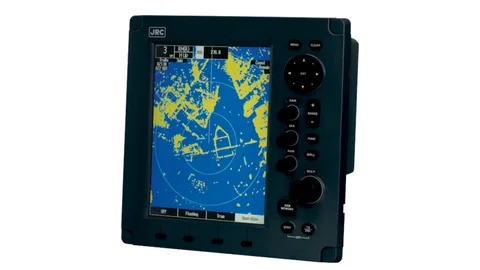
Own catalog image of JRC JMA-3300: display series. The scanner and the entire scope of supply are not shown in the photo; the equipment configuration and the actual kit are confirmed by quotation.
The radar pattern begins with the reflected signal.
The radar receives reflections from surrounding objects. This is its own measuring path: a scanner, a connection to the display and signal processing. It is needed by the vessel for radar surveillance, not just for displaying information transmitted by other participants in the movement. The information received from the AIS can complement the screen while maintaining a separate data origin.
The JMA-3300 uses digital processing and System-on-Chip technology. The practical interest of the buyer is a workable picture on a compact post. When discussing equipment, it is useful to describe the area and the usual situation: the coastal crossing, the approach to the port, the working water area. Advertising image photography does not promise the same visibility of all objects in all conditions.
The result is influenced by the reflection conditions, the environment and the installation of the scanner. Small object, coastline and precipitation create a different picture. Therefore, the requirement “radar should see everything” is better replaced by a specific task of observation and the choice of the appropriate configuration. Neither digital processing nor a large screen provide a universal detection guarantee.
Screen and controls as a workplace
The series features an NCD-2182 display with a bright 10.4-inch LCD screen. The keyboard, rotary regulator and four assigned function keys allow you to organize access to the desired functions. When choosing a post, the location of the screen relative to the workplace, access to controls and lighting conditions of the cabin are important.
The shipowner can decide in advance whether it will be a main radar location or a separate instrument next to the equipment already installed. This affects the layout and distribution of tasks between screens. The display must remain watchable and the connections and power supply available for the intended maintenance. Dimensions and method of attachment are specified for the actual configuration, and not evaluated by the photo of the front panel.
The documentation has automatic and manual amplification and handling functions for sea and rain interference. Their presence is useful to consider when choosing. The order of application is determined by the guidance and training of the skipper; there are no universal settings for unknown vessel and weather.
Scale, orientation and available image field
The chosen scale determines what part of the setting is viewed on the screen. A large representation of the near zone and a survey of the wider water area solve different problems. The maximum scale from the catalog does not equal the range of confident detection of any object. In addition, the JMA-3300 configuration has different scanners and technical parameters – you can not combine the maximum values of the entire series into one quotation.
The JRC provides options for image orientation and center displacement. These features help organize the presentation, but are associated with a specific configuration and the necessary external data. For the buyer, the question sounds substantive: what types of representations are needed for the workplace and what sources are already on the ship. In this way, functional expectation becomes part of the chosen system, not the assumption of the general brochure.
Traces and Semi-Constaview
Traces allow us to consider the change in the position of marks in time. The documentation of the series indicates several modes of their duration. This is a useful layer of information when observing the development of the situation: on one screen you can see not only the current mark, but also the envisaged representation of its previous movement.
The manufacturer associates Semi-Constaview technology with digital processing and display of true traces in Head-Up mode. The applicability of the function and the required input information are confirmed for the selected configuration. Traces are not a record of future movement and do not replace the assessment of the situation with a watch. Their task is to provide additional data representation, while maintaining the clarity of the chosen mode.
Communication with other bridge devices
The features of the series include AIS display and MARPA+ support. Real data and consistent connections are important for their use. Additional features do not mean that when you buy a radar, the ship automatically receives the AIS transponder, compass and all the necessary sensors. The equipment required is determined by the project and the applicable manual.
A practical task should start with the desired result on the screen. Existing navigation devices are then listed and their role in the radar post is determined. If part of the functions is used without additional equipment, and the other requires external information, this should be clear to the customer. The management of the vessel remains with the skipper; handling and escort functions are not automatic collision prevention.
How to connect opportunities with quotation
JMA-3300 is the designation of the series. The exact model, scanner, lines and accessories are fixed for a specific delivery. River Marine Pro’s own catalog image shows a JRC display: it does not define a complete scanner and is not a photograph of all the parts being transmitted. A complete hardware system is calculated with the necessary accessories and a total price.
The River Marine Pro card indicates the price and availability with shipment from the warehouse. The price refers to the published quotation series; configuration, actual balance, condition and composition are confirmed separately. For the calculation, send information about the vessel, the required functions of the post and the place of receipt in Russia or Kazakhstan. Documentation, work, configuration and delivery are agreed in the quotation, maintaining a clear cost of the selected solution.
JMA-3300 in our catalogue
The catalog shows the price and availability with shipment from the warehouse. The price refers to the published quotation series; the exact radar model, scanner and composition are confirmed separately. The current balance, condition, documents and total cost of the selected solution are specified before the order. Work and delivery separately. It is not a public offer.
Request a quoteManufacturer: JRC JMA-3300 Series: Functions, Presentation and Specification; JRC JMA-3300 - factory brochure, 6 pages. Features and accessories are verified for the selected configuration.