EPIRB inspection: what the annual test report confirms
RS and RKO rules: practical application
The emergency beacon has passed its self-test and its battery has not expired. That does not mean its annual inspection has been completed. The built-in test, the inspection required by the rules, and maintenance serve different purposes and produce different records. When preparing a vessel for operation, record these separately for the specific device.
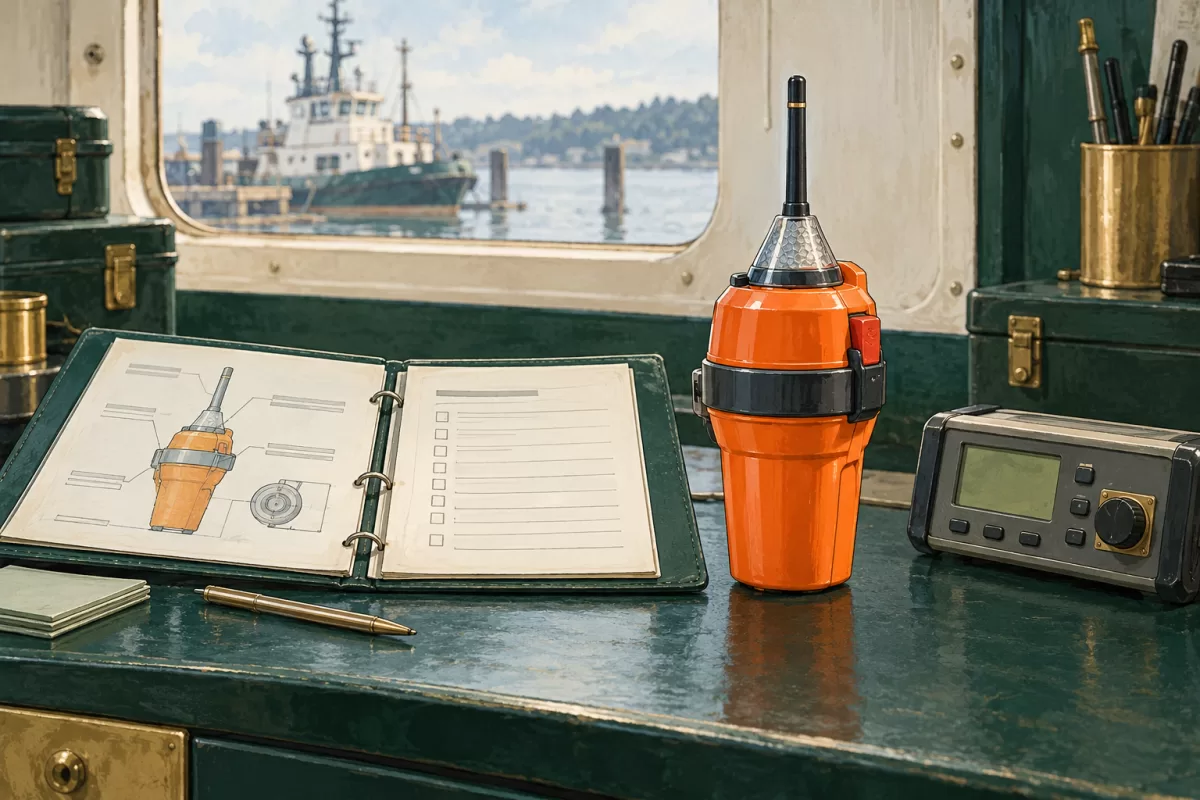
Which requirements apply
Paragraph 3.2.12 of Part VII, “Radio Communications Equipment”, of the RKO PKPS requires an annual EPIRB inspection on board or by an organization recognized by RKO. The inspection covers emissions on the operating frequencies, coding and registration. Paragraph 3.2.13 separately requires maintenance and repair at intervals of no more than five years by a recognized shore-based maintenance organization.
These requirements belong to the new Part VII introduced by Order No. 29-p of 31 March 2026, effective from 3 April 2026. First establish which edition applies to the particular vessel: paragraph 1.1.2 relates requirements for vessels in service to the rules under which they were built, unless otherwise specified. Publication of a new text does not automatically require replacement of every serviceable item. The July amendments, No. 70-p, must also be taken into account in the current edition.
Three separate records instead of a single “serviceable” mark
| Work | Question it answers | Records to retain for the particular EPIRB |
|---|---|---|
| Self-test in accordance with the manufacturer’s manual | What result did the specified built-in procedure produce? | Date, equipment identification and the indication obtained |
| Annual inspection under 3.2.12 | Have emissions, coding and registration been checked? | A document identifying the equipment and recording the results of the required inspection |
| Shore-based maintenance under 3.2.13 | Has the work been carried out at the required interval? | The organization’s document, scope of work and next due date |
This table is a way to organize records, not a test-report form prescribed by the rules. The applicable procedures and documentation determine the measurements and reporting requirements. A built-in self-test does not become an annual test simply because a green indicator lights up on the casing.
Start by identifying the equipment
Before agreeing the work, collect the EPIRB designation and serial number, beacon code, registration details, vessel particulars and previous records. Separately record the battery and release-device dates shown on the particular equipment. Different dates are normal: these components have separate maintenance requirements.
The River Marine Pro catalogue includes the NSR NEB-2000 satellite EPIRB. This is a starting point for selecting the beacon and agreeing the supply package. A new-equipment product page does not confirm the coding or registration of an installed unit, or completion of its annual inspection. An enquiry concerning an existing NEB-2000 needs the information from that specific unit’s markings and records.
If the beacon is sent ashore, agree the work schedule and the vessel’s subsequent readiness in advance. Establish who will perform the inspection, which recognition covers the required work, and what document will be issued. A statement such as “we will check it on the bench” does not answer these questions without equipment identification and a defined scope.
Coding and registration after vessel details change
Equipment replacement or a change in vessel particulars calls for a comparison of the records, rather than rewriting a line from memory. The code shown on the equipment and in the inspection records must relate to the actual unit concerned. Check registration details under the applicable procedure. Resolve any discrepancy and agree the correction with the responsible parties.
Do not program a beacon using somebody else’s online example or test a distress transmission by simply switching it on. Emission testing must follow the specified procedure, using the necessary equipment and safeguards against false alerts. This article helps prepare the information and assess the recorded result; it does not replace the manufacturer’s manual or the test procedure.
Accepting the work without unnecessary repeat checks
Match the equipment, vessel and work actually performed against the issued document. Check that it addresses the emissions, coding and registration covered by the annual inspection and gives each finding a clear status. Record the next due date after accepting the work, separately from the battery expiry and shore-based maintenance dates.
If EPIRB replacement is planned, send the existing package details and your requirements for the NSR NEB-2000. The quotation should distinguish equipment supply, accessories, programming and the specified service work. Availability, version and documents are confirmed for the selected supply. Buying a new beacon does not itself constitute a test report for that beacon on a particular vessel.
Sources and scope of this guide
Sources: Official new Part VII of the RKO PKPS, Order No. 29-p, paragraphs 1.1.2, 3.2.12 and 3.2.13; Amendments No. 70-p of 13 July 2026. The notes on record keeping and acceptance are practical editorial guidance. The vessel’s documents and applicable rules determine its specific requirements and inspection procedure.