JMA-3300 on an existing equipped mast: where to position the scanner
First find a place to review
On the ship, the radar is being changed, and the mast is already occupied: communication antennas, navigation sensors, lights and other devices are nearby. It seems convenient to put a new scanner on the previous site. But for the purchase of the JMA-3300, it is more important to know in advance what kind of view will be obtained in this place and whether it is possible to maintain the equipment normally after installation. The finished holes in the base do not yet answer these questions.
Request a quote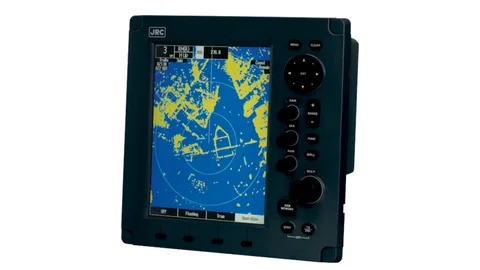
Imagine a working vessel, which behind the mast is a high superstructure, and next to the proposed site is a cargo boom. The owner needs a workable radar in the normal states of the ship, not just a neat installation in the photo. Therefore, the technical discussion begins with the location of obstacles, operating positions of mechanisms and available space around the selected scanner.
What can close the right direction
In the JRC JMA-3300 Installation Manual, Section 2.1, position selection is related to view, surrounding structures, strength, vibration and maintenance. The manufacturer separately considers the blind sectors and reflections from the ship’s designs, adjacent scanners and cargo. These are grounds for design evaluation of a particular location; image settings do not replace such evaluation.
For discussion, prepare a top view and a side view of the mast with nearby objects. It is enough to start with the existing drawing and photos: where the diametric plane passes, what is in front of the site, which closes the lateral directions. Measurements, surveys, and final placement are performed by a designer or installer working with the documentation of the selected configuration.
Ask the specialist to explain the result in ordinary words. Which areas remain open? Where can designs affect detection? What changes will need to be made to the equipment? Such a conversation helps to compare two real accommodation options, rather than two “put higher” promises. Fully free viewing on any vessel is not expected in advance.
Consider the working conditions of the ship
The position of the obstacle is constant or variable. The superstructure remains in place, and the arrow, folded tooling or cargo change the surrounding picture. Show the designer the state in which the ship is actually operating and moving. If a configuration is used only when parking, it is also useful to note that the purpose of each state affects the discussion of the project.
| What's next | What to show the specialist | Which question to decide |
|---|---|---|
| Mast and superstructure | Drawing, side view, main dimensions | Where the review shading is expected |
| Cargo and movable equipment | Normal working conditions | How the environment is changing |
| Other antennas and devices | Their situation and patterns | How to agree on joint accommodation |
You also need to understand how the environment will change after other planned work. If you simultaneously install a satellite antenna, transfer a flashlight or change the cargo gear, include this in one scheme. Otherwise, a location convenient for radar today may be occupied or blocked after the next stage of the repair.
Height, neighboring antennas and access
The height of the scanner is selected along with other conditions. In section 2.1, the JRC considers both insufficient and excessive height relative to detection tasks. There is no universal value for any body here. For a river vessel, additionally inform the designer of the height restrictions on the route and the stipulated positions of the mast: these are the initial data of the project, and not an excuse to independently reduce the required distances.
Neighboring VHF, satellite and navigation antennas are applied to the same plane. The JRC manual requires that the equipment relative to the scanner diagram be considered. The statement “antennas do not interfere with each other” is not enough to reconcile. The specialist should see the location of the devices and the manuals of each of them, especially if the second radar remains.
A separate issue is future access. Before buying, discuss where the service specialist will work, how he will approach the scanner and what designs will interfere with maintenance. The base is assessed by loads and vibrations for a particular vessel. The list of necessary changes and works is useful to get before the order: then the cost of the installation is compared with the selected equipment.
How to request JMA-3300 for a specific mast
River Marine Pro’s own card lists the JRC JMA-3300 with the price in the product card. The price is not a public offer; the actual cost, availability and term are confirmed by letter. The designation belongs to the series, so the exact model, scanner, interblock connection and scope of supply are fixed in the quotation. The price of the card does not mean any scanner, finished mast or included installation work.
Enclose information about the vessel, drawings or photos of the intended location, the position of the neighboring equipment and the route restrictions. Write down whether the previous site is maintained and what works have already been agreed. We will link the quotation to the radar with the initial data for the installer and refine the kit contents with the total price. The project of accommodation, installation and inspection on the ship shall be agreed separately.
Indicate the city and address of receipt in Russia or Kazakhstan, the period of repair and contact of the contractor. This will allow you to coordinate the delivery of the selected set to the prepared parking lot. As a result, the purchase decision will take into account not only the appliance itself, but also the place where it should do its job.
Questions before buying
Can you just keep the radar track?
It is considered as one of the options. For the selected scanner, you need to evaluate the review, surrounding structures, base and access to service; matching fasteners is not enough.
Will a scanner transfer necessarily eliminate all blind sectors?
The result depends on the specific vessel and project. The specialist compares the accommodation options and explains the restrictions that will remain after the agreed work.
The main set in our catalog
JRC JMA-3300
The current price is indicated in the product card. the price of the position in the card, not a public offer. The exact model, scanner, cable, condition, availability and total price of the kit will be confirmed by letter. The design, installation and work are agreed separately.
Request a quoteManufacturer's documents: JRC JMA-3300 Installation Manual, §2.1: Selection of scanner location, pp.2-1-2-5 (copy of manufacturer's document), JRC – JMA-3300 series, configuration and scanners. Applicable edition and layout design are agreed for the selected configuration.