Set of communication of a river vessel for examination: what is collected in advance
Why don’t they start in a week?
To prepare for the survey, collect information about the installation, its condition, the equipment versions and the available documents. Confirm the requirements for the particular vessel and scope of work.


Some positions are rare. A station with the recognition of a river register, a charger of a certain configuration, an emergency source of the desired capacity appear in the warehouse irregularly and leave quickly.
Some of the positions require time to be issued: permission to use frequencies, registration of a marine station, making changes when changing the name or owner.
Hence practice: the list is made immediately after the previous examination, and not before the next. Order rare positions are made in advance, even if the device is still working.
What the kit is made of
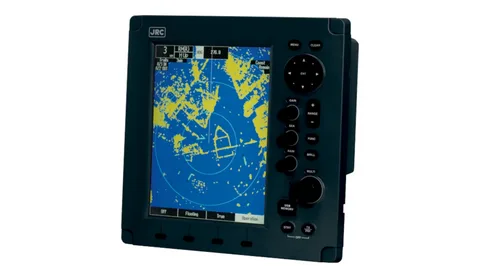
The main communication station in the cabin is what is being negotiated with the dispatcher, gateway and oncoming vessels. It has antenna, feeder, power supply and manipulator.
Handheld stations - for deck work and mooring, with spare batteries and chargers.
Means of notification: loud-speaking installation with horns and the ability to provide installed sound signals.
Emergency equipment where required by type of vessel and area of navigation, with its own timing of verification and replacement of power supply elements.
Power supply: the main, backup and device that keeps the reserve ready. This part is often a weak point.
Documents: certificates and passports for devices, marine license, records of inspections and verifications, journal.
Where they usually stumble
The device was replaced, and the documents remained from the former. Replacement without making changes to marine paper is the most common reason for a remark.
There is a backup source formally, but no discharge test was carried out. A battery of five years of age will almost certainly not give the required time, and this is found out on inspection.
The antenna was rescheduled during the repair of the cabin and no one checked the approval after the transfer. Device is in good condition, communication is worse, the reason is in the device.
There is a handheld station, but there are no spare batteries. Formally a set, almost half a shift without communication.
The name of the ship has changed, and the identification equipment remains old data.
Manning procedure
The first is to check the actual composition with the entries in marine documents. Not what is worth, but what is written and find discrepancies.
The second is to understand the term for each position: what is to be replaced by time, what is the result of measurement, what does not have a deadline.
The third is to check for rare positions with the supplier and reserve what will be needed in the coming year.
The fourth is to calculate consumables: batteries, power supply elements, seals, fuses, manipulators. They are cheap, and they are not the ones that come at the right time.
The fifth is to assemble a folder of documents in advance and make sure that there is paper on each device, not just a box.
What to check before the inspector arrives
The two-way communication on each work channel with the real correspondent, not just the reception.
Intelligibility from the nose and from the stern for the loudspeaker installation and the supply of each provided signal with interval exposure.
Work from a backup source with time measurement under load and transition to a reserve without interruption of power supply.
The alignment of antennas by measurement, not by subjective evaluation of audibility.
Correction of all manipulators and headsets, including spare ones, and the charge of all batteries.
Compliance of data recorded in identification equipment with marine documents.
What to keep in reserve constantly
Manipulator to stationary station and one set of batteries on handheld. These are the two positions that are most often denied.
Seals and connectors for external devices, a set of fuses in denominations.
One spare horn for a loudspeaker if the vessel is operating in an area with frequent fog.
Copies of documents in electronic form separately from the paper folder. The folder is lost and recovery takes weeks.
Preparing an equipment list for different types of river vessel
For a tug and pushed convoy on the Kama, first record the existing vessel equipment and operating stations. For a passenger ship on the Volga, describe the bridge, portable kits and storage locations separately. Use the documentation for the particular vessel and the work specification: the vessel type alone does not replace an agreed equipment list.
For a dredger on the Don, it is useful to attach a list of devices to be temporarily removed, cables to be retained and accessories required. Before purchasing for delivery to Rostov-on-Don or Nizhny Novgorod, distinguish repairs to the existing installation from new equipment. Record the version, kit contents and required documents for each item. This makes the enquiry specific, without assuming one universal kit for all vessels.